One of the first decisions therapists face when building an online presence is whether to use a website template or invest in a custom-built site. Both options have legitimate use cases, and the right choice depends on where your practice is right now and where you want it to go. This guide breaks down the differences, the trade-offs, and a framework for making the decision that fits your situation.
What Is a Template Website?
A template website starts with a pre-designed layout from a platform like Squarespace, Wix, or WordPress.com. You choose a theme that looks close to what you want, then customize it by swapping in your own photos, adjusting colours, and adding your copy. The structure, navigation, and page layouts are largely predetermined by the template designer.
Templates are designed to work for a wide range of businesses. That's their strength and their limitation. A Squarespace theme marketed to therapists will look polished out of the box, but it was built to serve thousands of practices, not yours specifically. You're working within the constraints of what the template allows, and those constraints become more apparent the longer you use it.
What Is a Custom Website?
A custom website is built from scratch with your specific practice goals in mind. Every design decision — the page structure, the user flow, the placement of calls-to-action, the way services are organized, is made intentionally to support how your practice operates and how your ideal clients behave online.
Custom doesn't necessarily mean expensive or complex. It means purpose-built. A custom site for a solo therapist might be five pages, but each page is designed with a clear conversion goal: get the visitor to book a consultation. The design, copy, and technical architecture all work together toward that single outcome.
When Templates Work
Templates are a reasonable choice in specific situations. If you're a new solo practitioner just getting started, a template can get you online quickly and affordably. When most of your clients come from referrals — from physicians, other therapists, or word of mouth — your website serves more as a validation tool than a client acquisition channel. People are checking that you're legitimate, not discovering you for the first time.
If your budget is tight and you need a web presence within weeks rather than months, a template platform lets you launch something functional without a significant financial commitment. You can always upgrade later when the practice grows.
Templates also work well when you're still figuring out your niche. If you haven't settled on the specific modalities or populations you want to focus on, investing in a custom site built around a specific positioning might be premature.
Template Shortcomings
The problems with template websites tend to surface over time rather than immediately. The most significant issue is generic structure. Templates organize content in ways that work for general businesses, not for the specific journey a therapy client goes through. The emotional arc from "I'm struggling" to "I'm ready to reach out" requires intentional page design that templates simply don't account for.
Limited booking integration is another common frustration. Most templates offer basic contact forms, but integrating with Jane App, SimplePractice, or other therapy-specific booking platforms often requires workarounds that break the user experience. A visitor who has to leave your site, navigate to a separate booking platform, and figure out the process from scratch is a visitor you're likely to lose.
Performance issues are endemic to template platforms. Squarespace and Wix sites frequently score poorly on Google's Core Web Vitals, the speed and responsiveness metrics that directly affect your search rankings. These platforms load significant amounts of JavaScript and CSS that your site doesn't need, and you have limited ability to optimize it.
There are also hidden time costs. The promise of templates is that you'll save money by doing it yourself. In practice, therapists often spend dozens of hours wrestling with template limitations, watching tutorials, and trying to make the site do things it wasn't designed to do. That time has a real cost, even if it doesn't show up on an invoice.
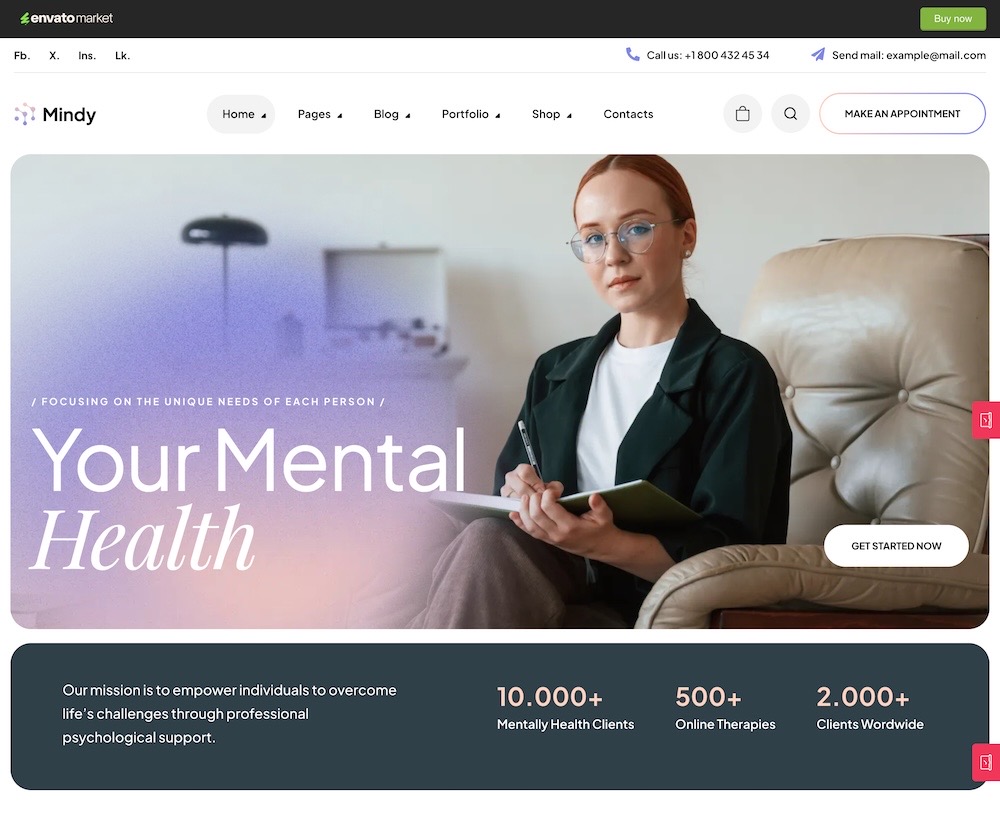
Perhaps most critically, generic copy kills conversions. Effective copywriting requires specificity that templates don't encourage. Templates encourage you to fill in placeholder text, which often results in vague, impersonal language that could describe any therapist anywhere. Effective therapy websites need copy that speaks to specific pain points, specific populations, and specific outcomes. Templates don't guide you toward that level of specificity.
Custom Website Benefits
Conversion-focused design is the primary advantage of a custom site. Every element — from the hero section to the footer — is placed with intention. The colour palette, typography, white space, and visual hierarchy are all calibrated to guide visitors toward booking. There's no wasted space and no generic sections included because the template required them.
Dedicated landing pages per modality make a significant difference for practices that offer multiple services. If you provide both anxiety therapy and couples counselling, each service deserves its own page — a dedicated landing page — with targeted copy, relevant testimonials, and a clear call-to-action. A custom site makes this natural. A template makes it awkward.
GA4 tracking and conversion measurement can be implemented properly from day one. You'll know exactly how many visitors become consultation requests, which pages perform best, and where people drop off. This data is essential for making informed decisions about your marketing spend.
A strong SEO foundation is built into the architecture of a custom site. Clean URLs, proper heading hierarchy, optimized page speed, schema markup, and internal linking are all handled during development rather than bolted on afterward. For therapists who plan to invest in SEO or Google Ads, this foundation pays for itself.
Optimized booking integration means your scheduling platform feels like a seamless part of the site, not an afterthought. Whether you use Jane App, SimplePractice, or another platform, the booking flow is tested and refined to minimize friction.
Decision Framework
The choice between template and custom comes down to how your practice acquires clients and what you need your website to do.
Choose a template if your practice is primarily referral-based, you're just starting out and still defining your niche, or you need a basic web presence while you focus on building your clinical skills and reputation. A well-executed template site with strong copy can serve you well in these situations.
Choose custom if you're running or planning to run paid advertising through Google Ads or social media. Sending paid traffic to a template site with generic structure and copy is like pouring water into a bucket with holes. You're paying for every click, and a site that isn't optimized for conversion wastes that investment.
Custom also makes sense if you offer multiple services or modalities that need their own landing pages, if you're in a competitive market where differentiation matters, or if you've already tried a template site and your conversion rates are disappointing.
The question isn't really "template or custom?" It's "what do I need my website to accomplish right now, and which approach gives me the best chance of getting there?" Start with that, and the answer usually becomes clear.

Jordan helps therapists and wellness practitioners get found and get booked. He has run his own SEO, Google Ads, and web design company since 2012, and in 2022 began working specifically with therapy practices across North America.